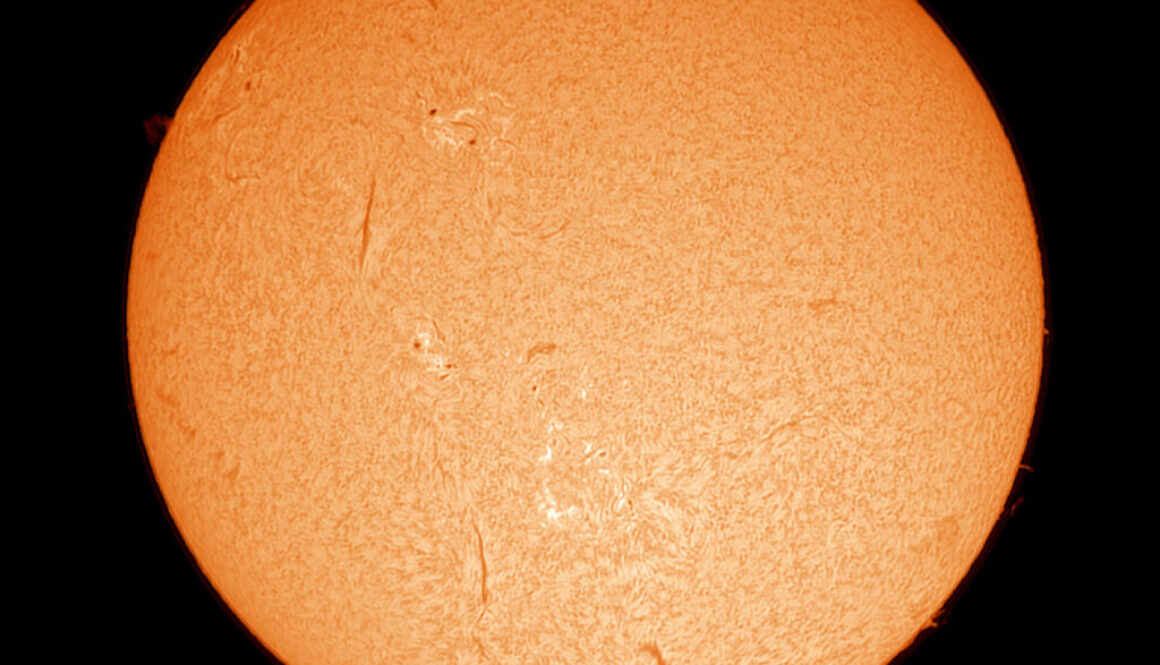
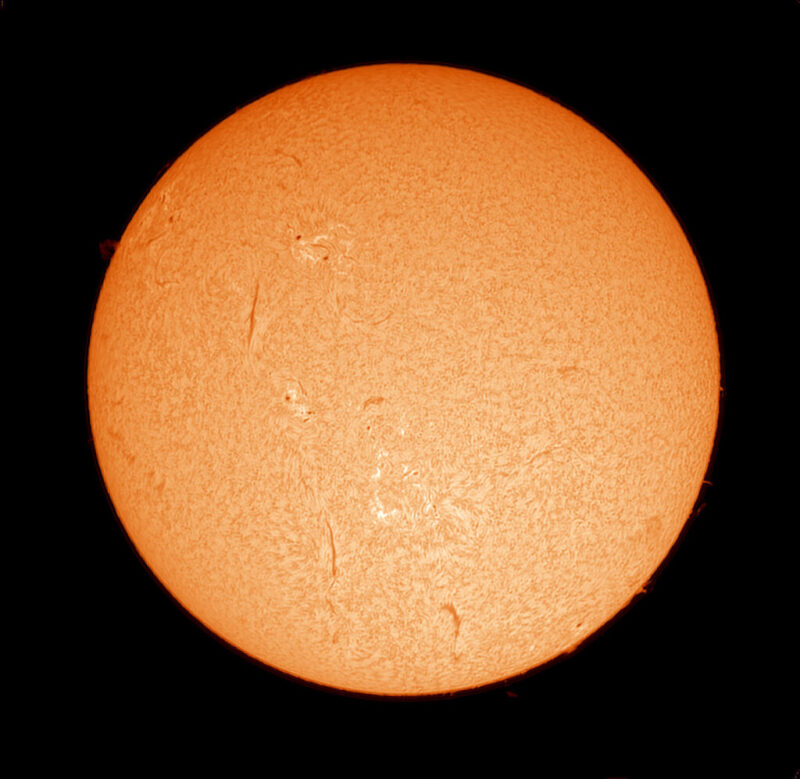
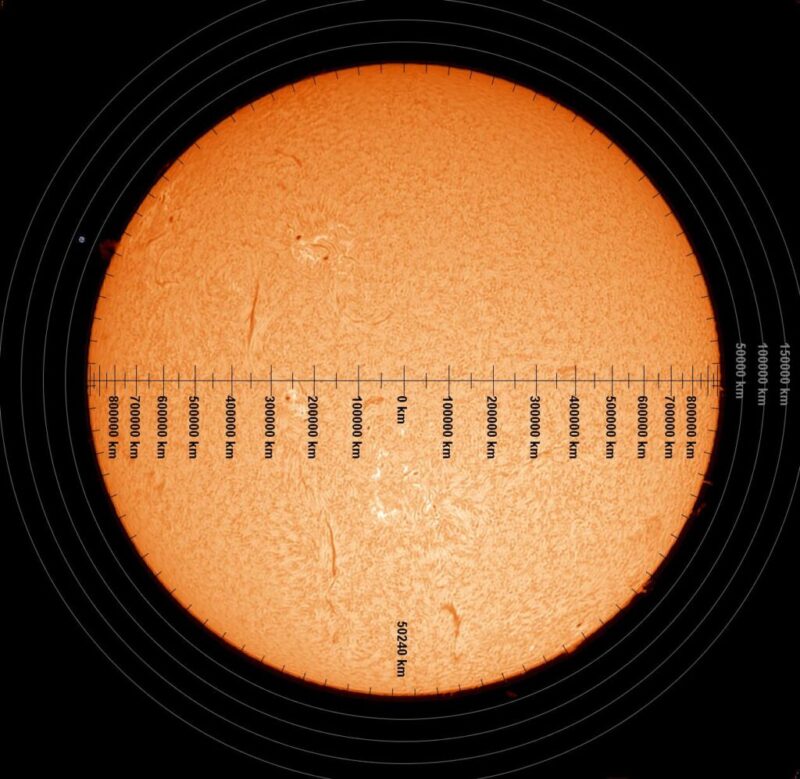
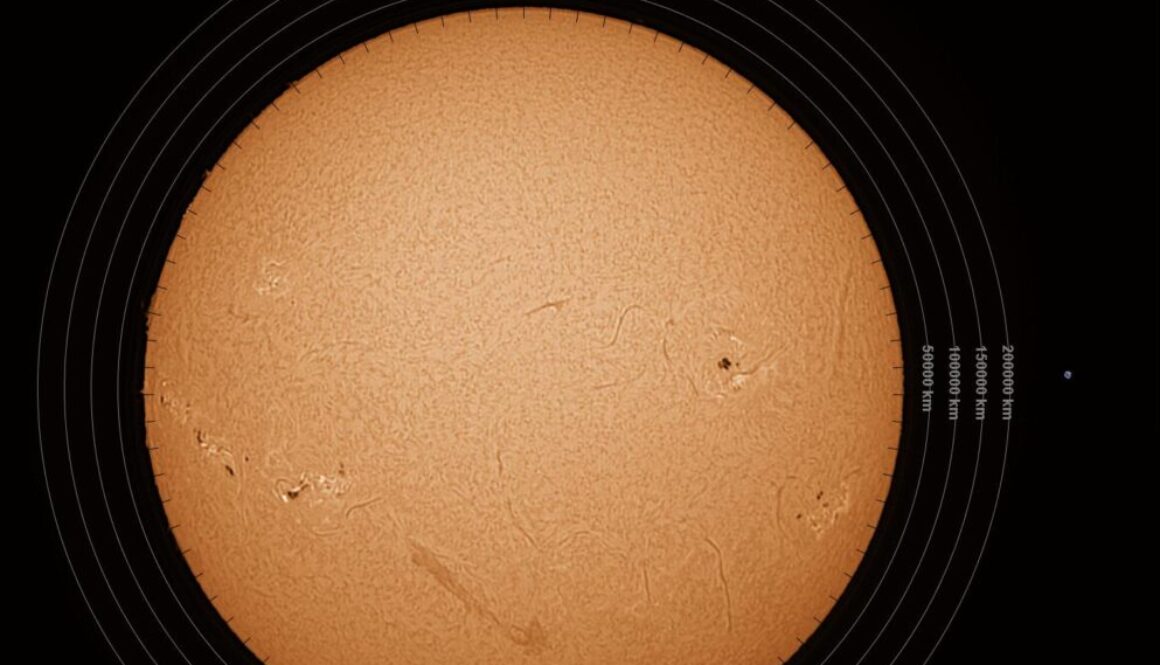
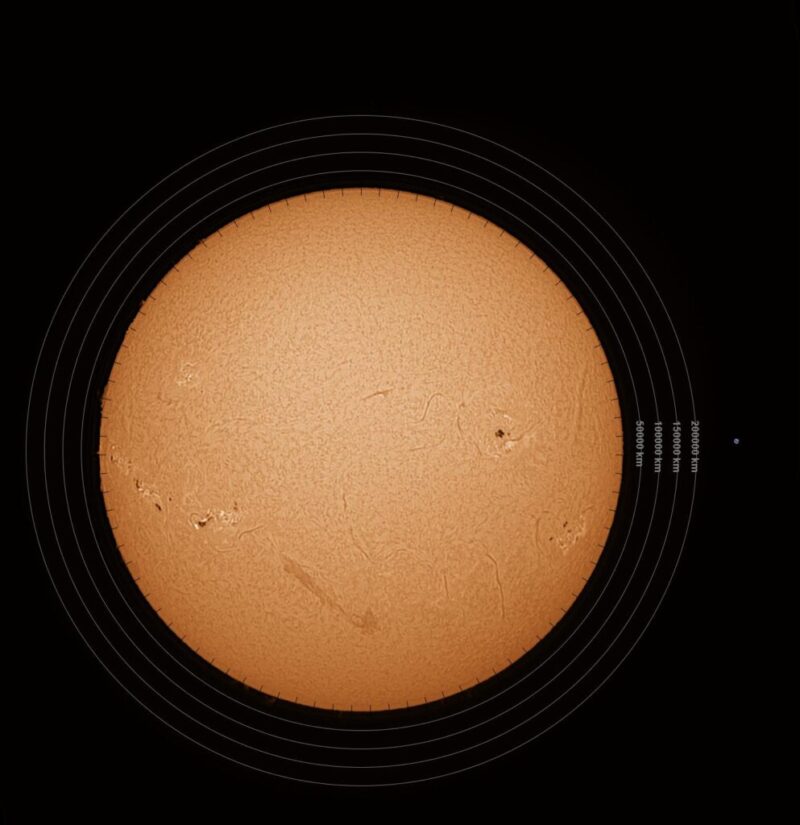
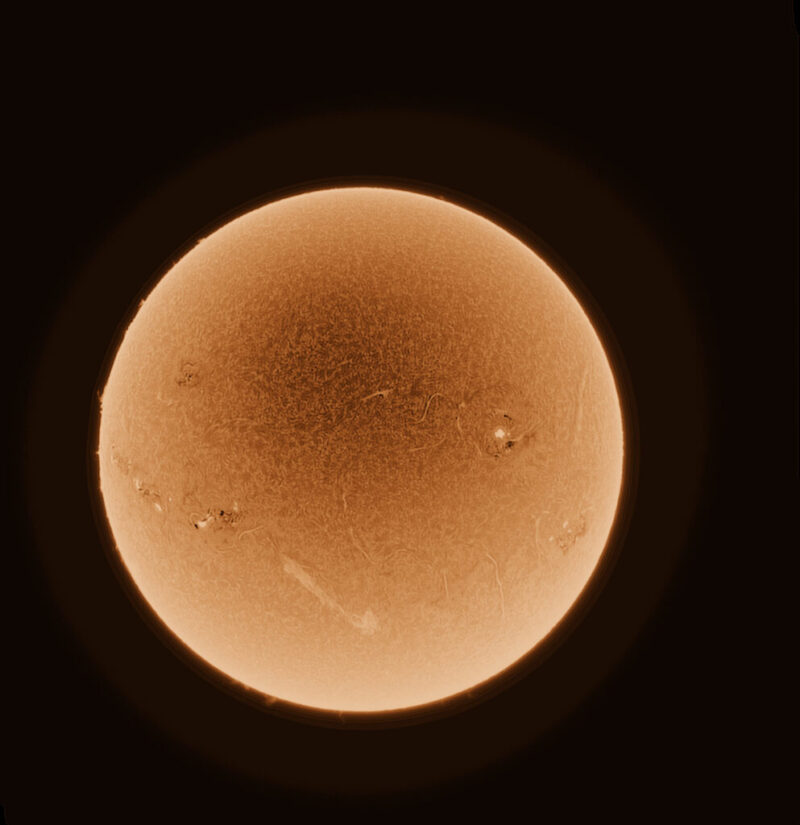
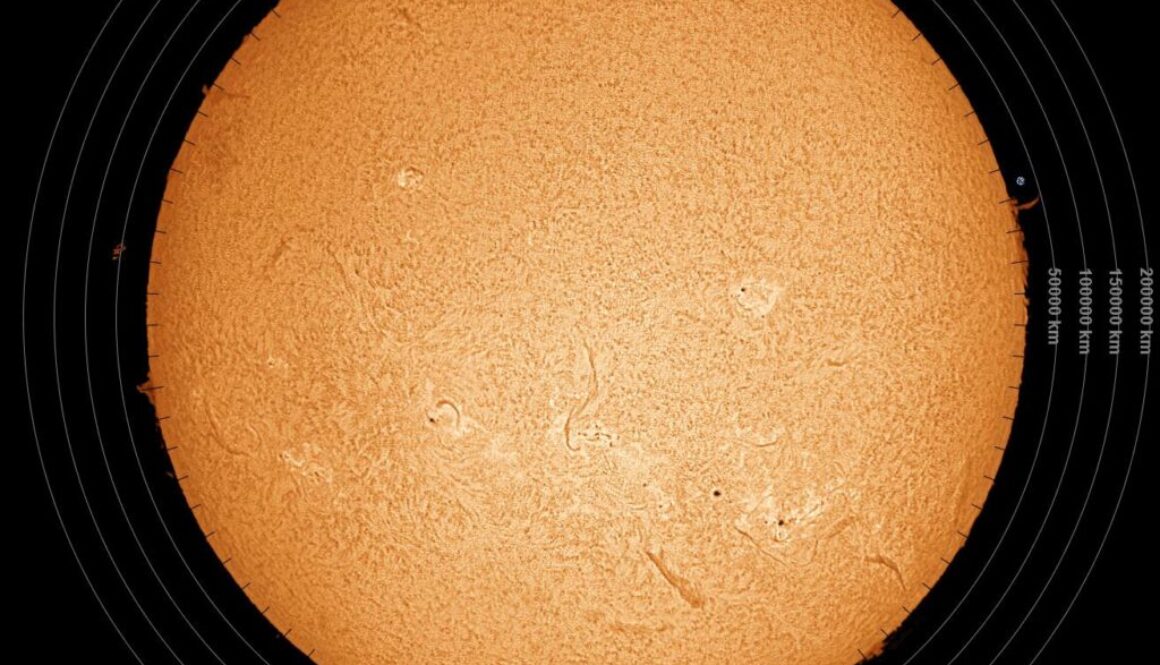
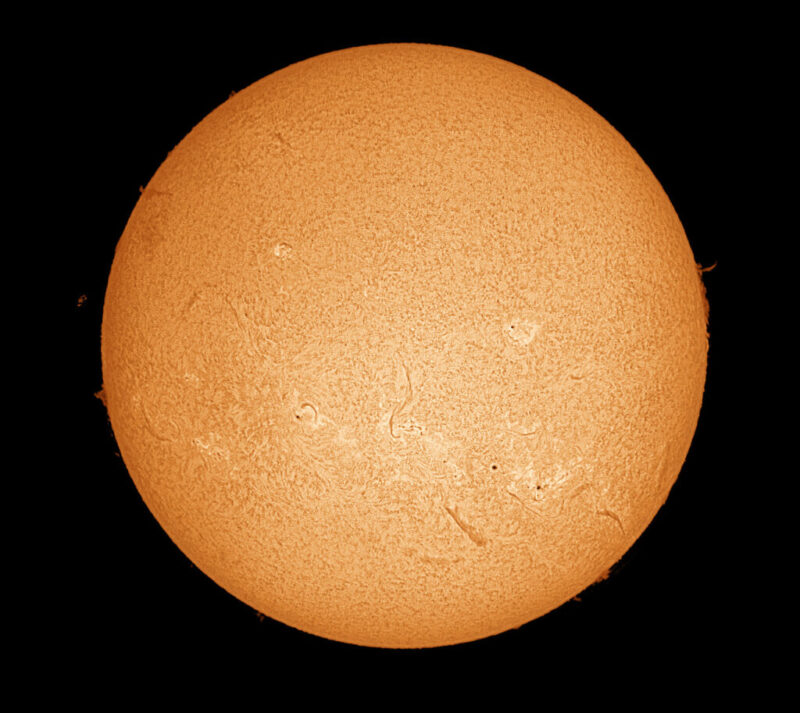
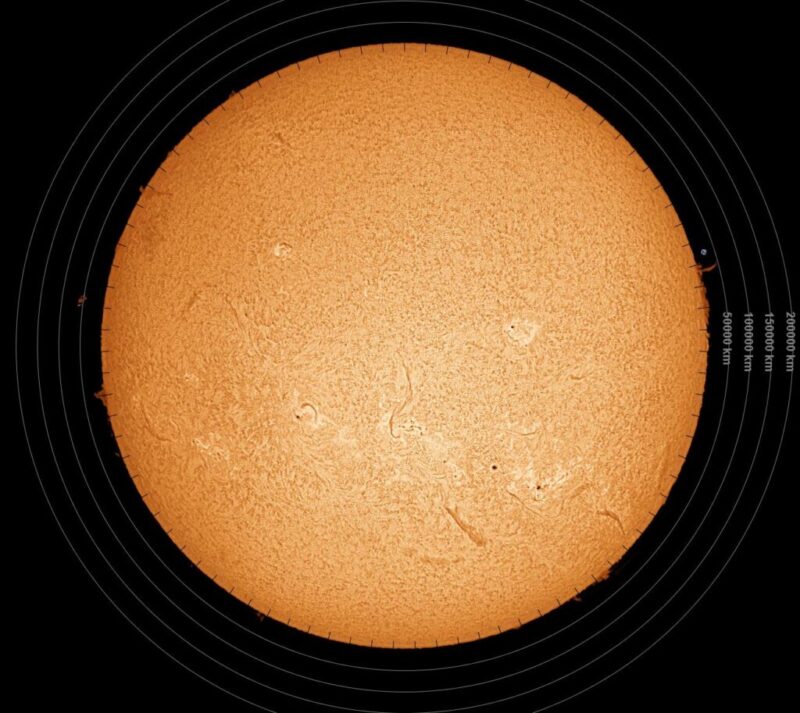
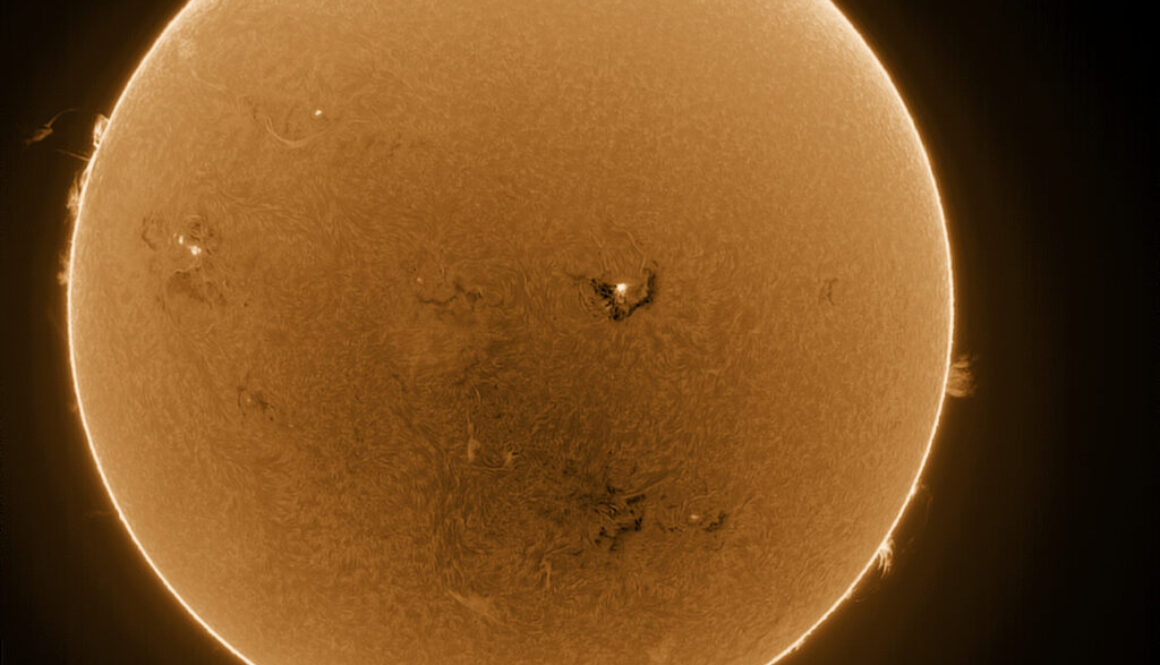
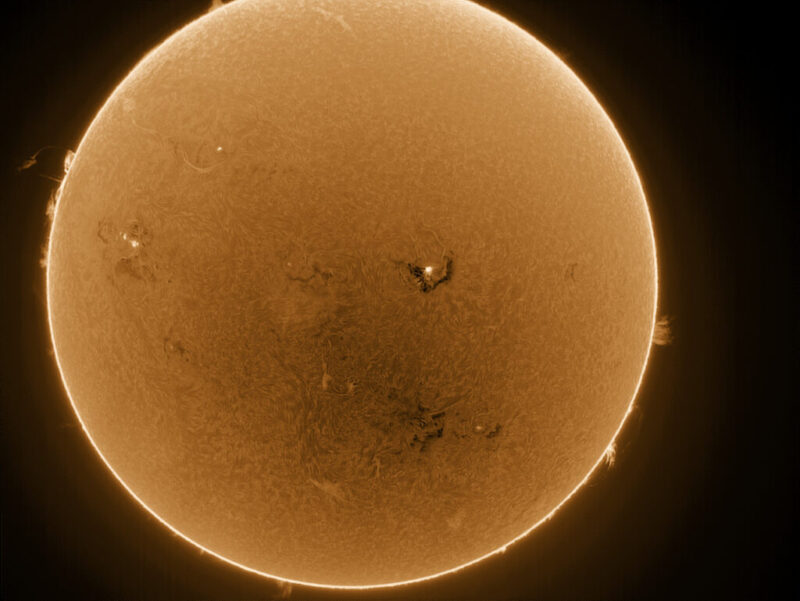
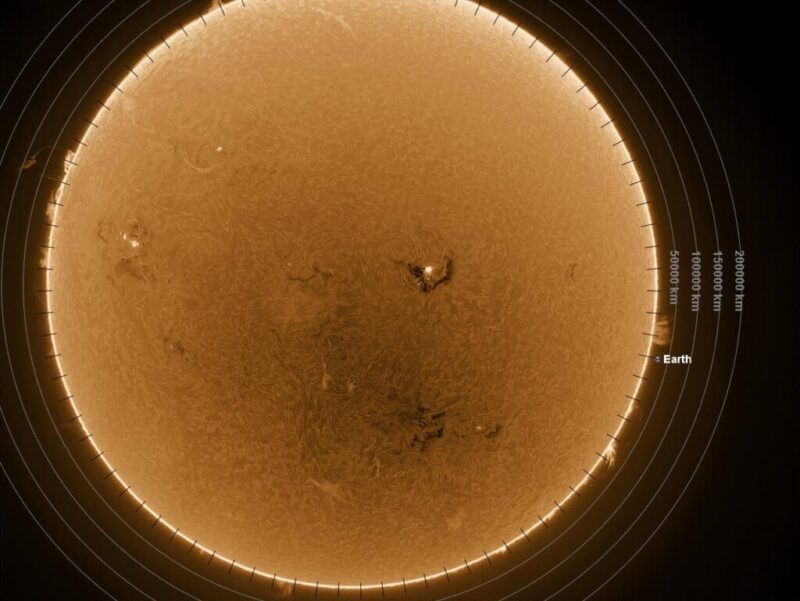
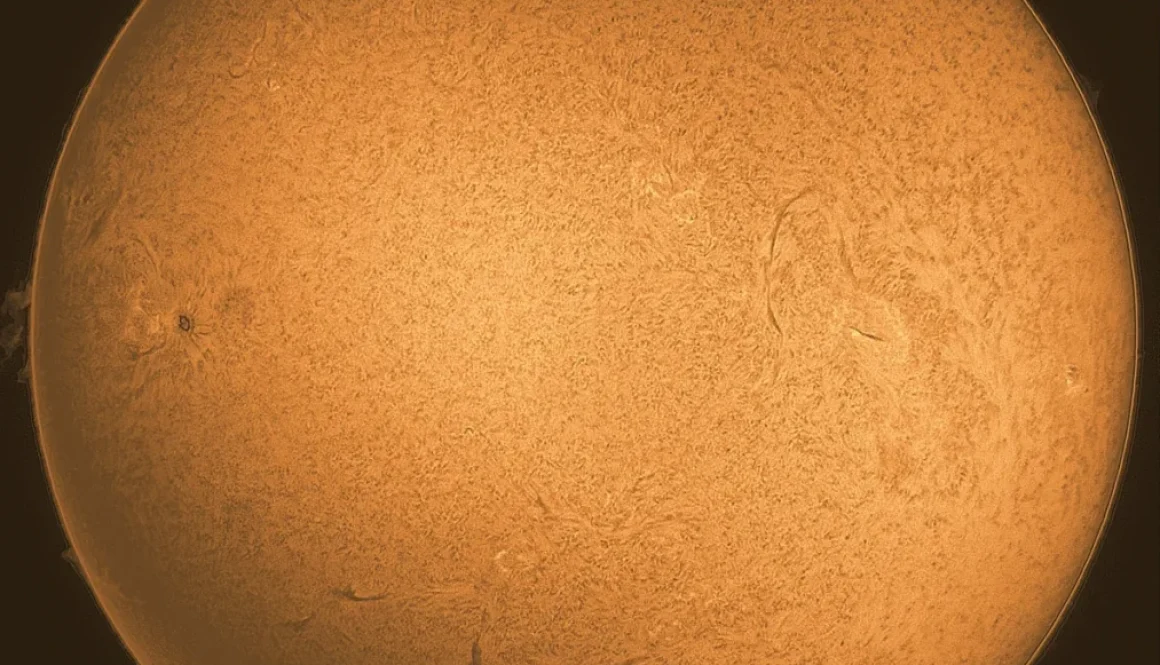
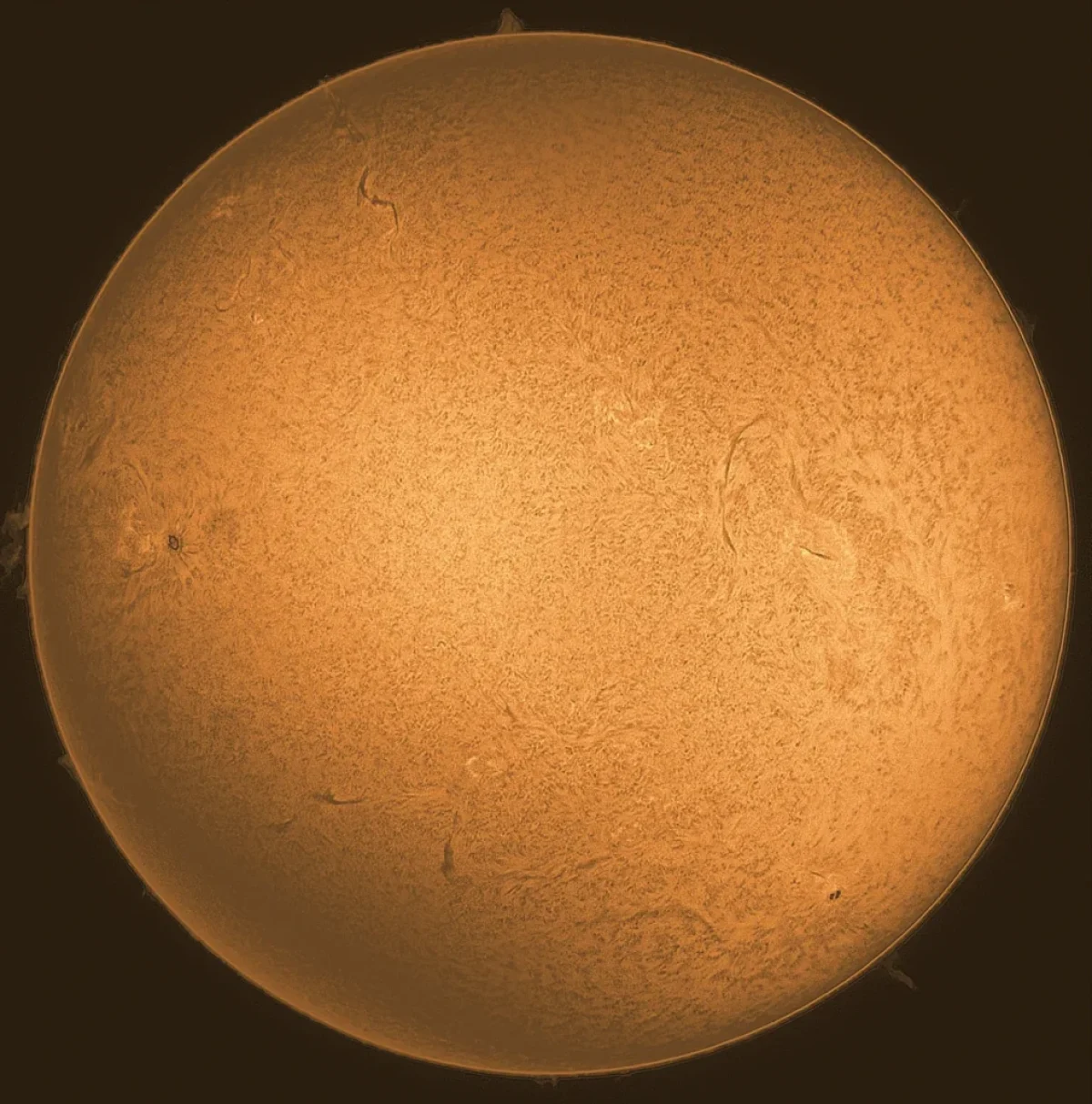
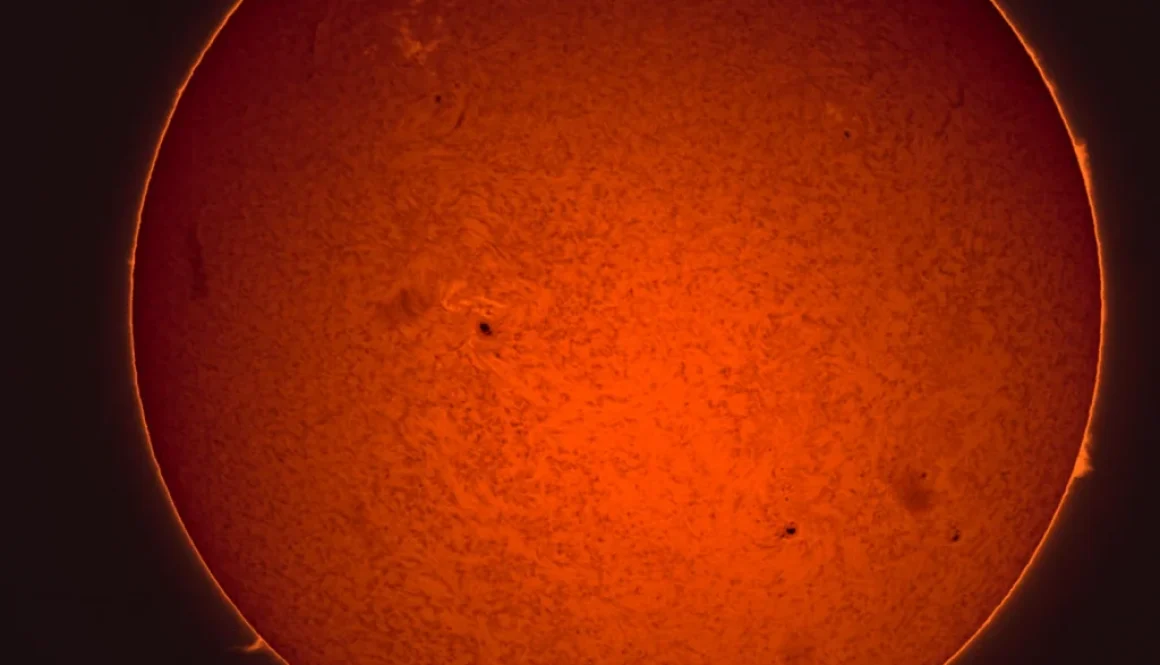
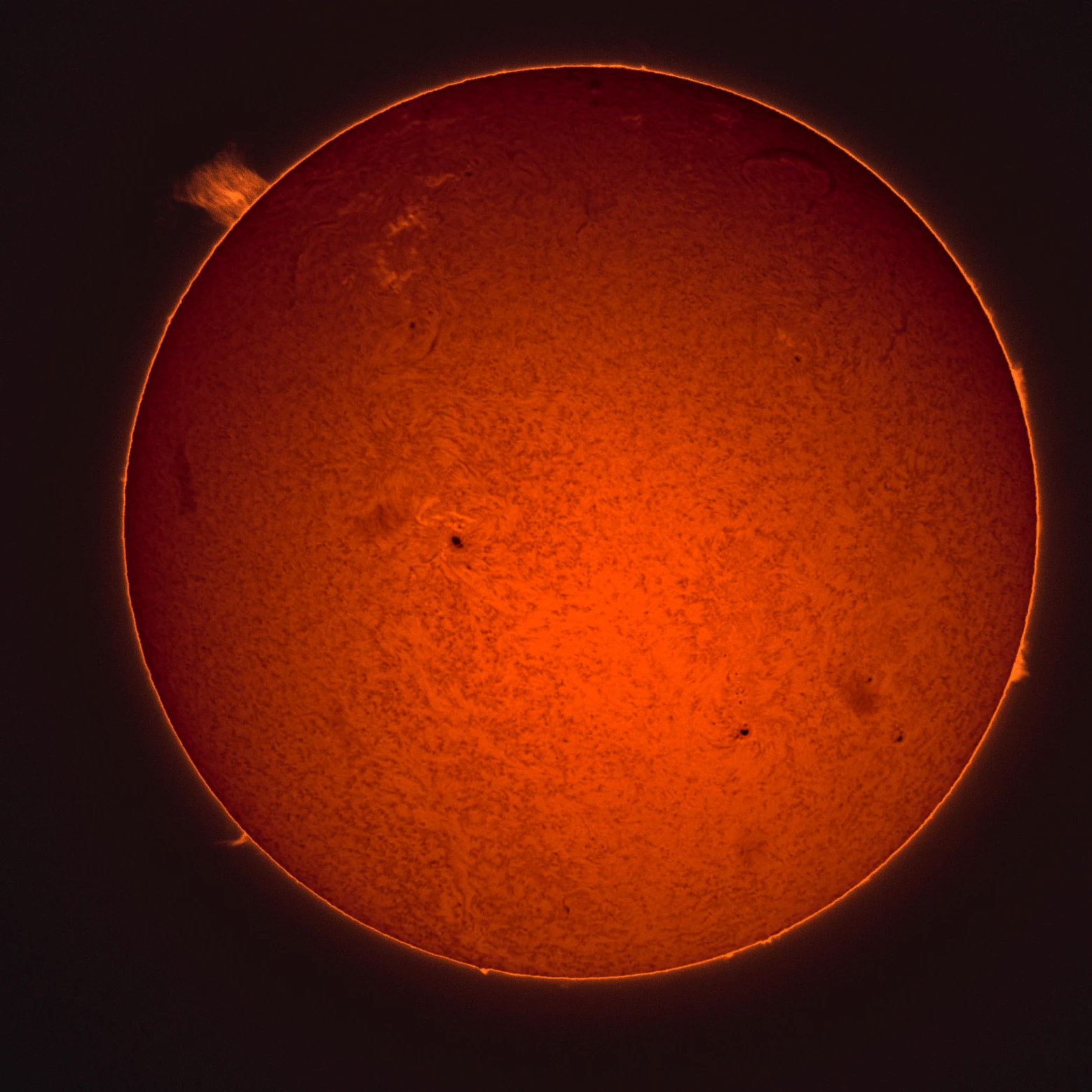
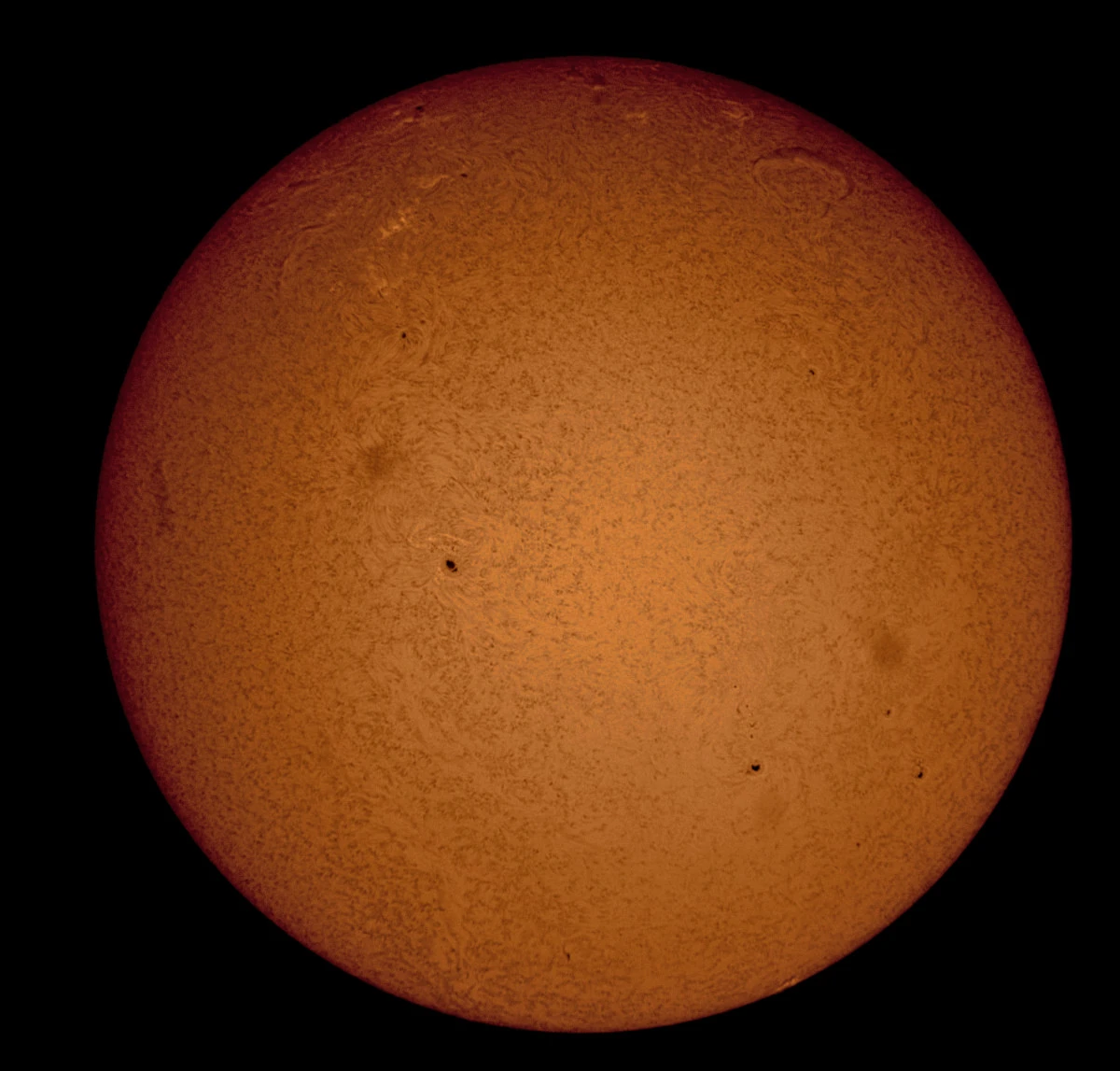
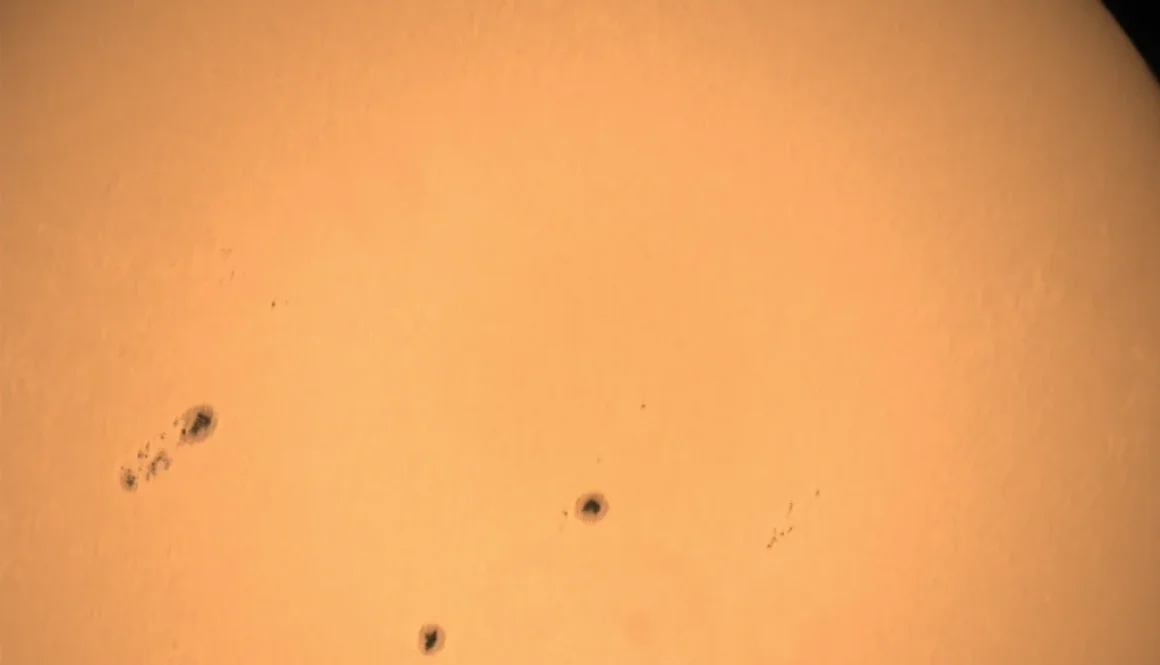
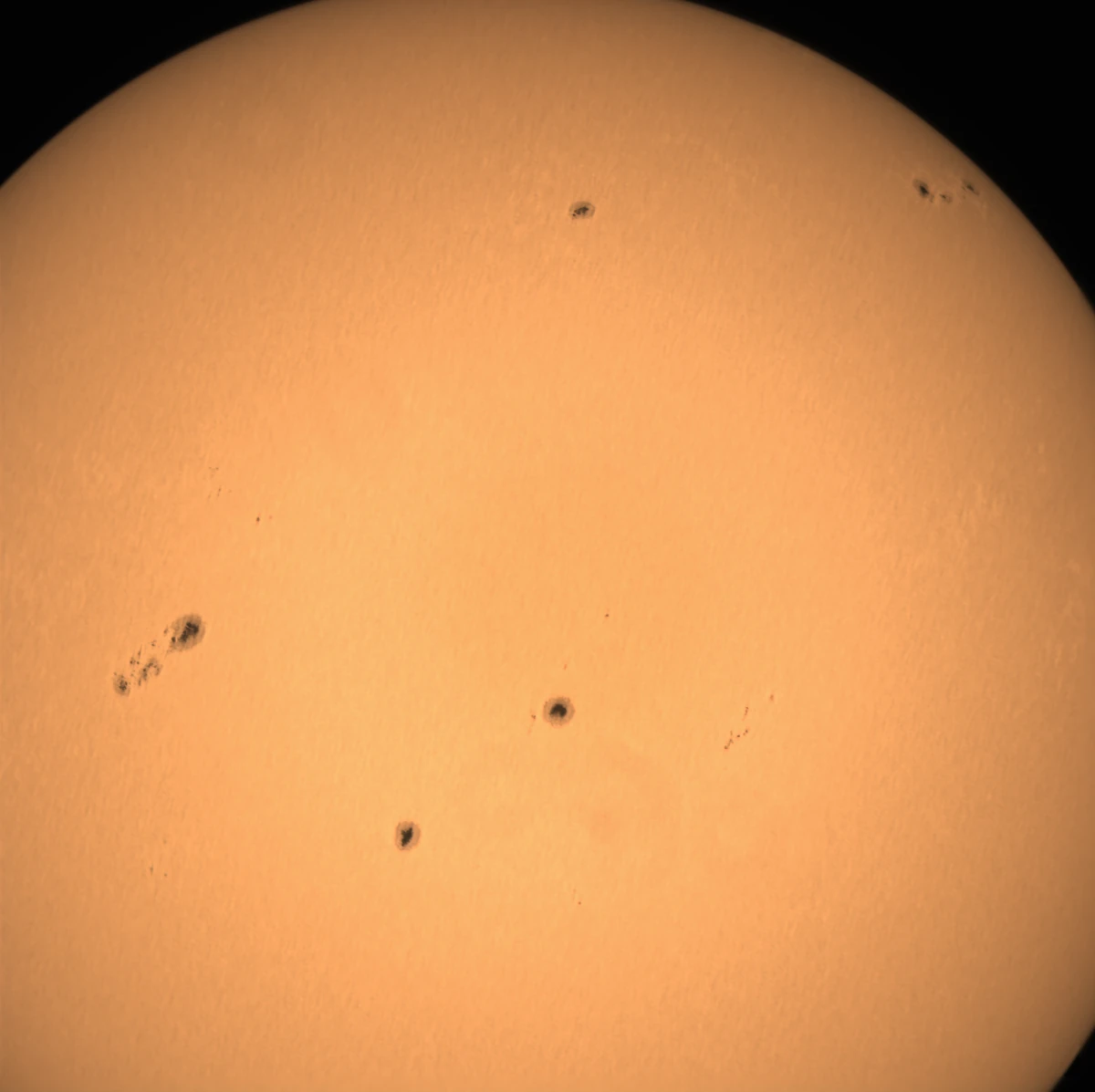
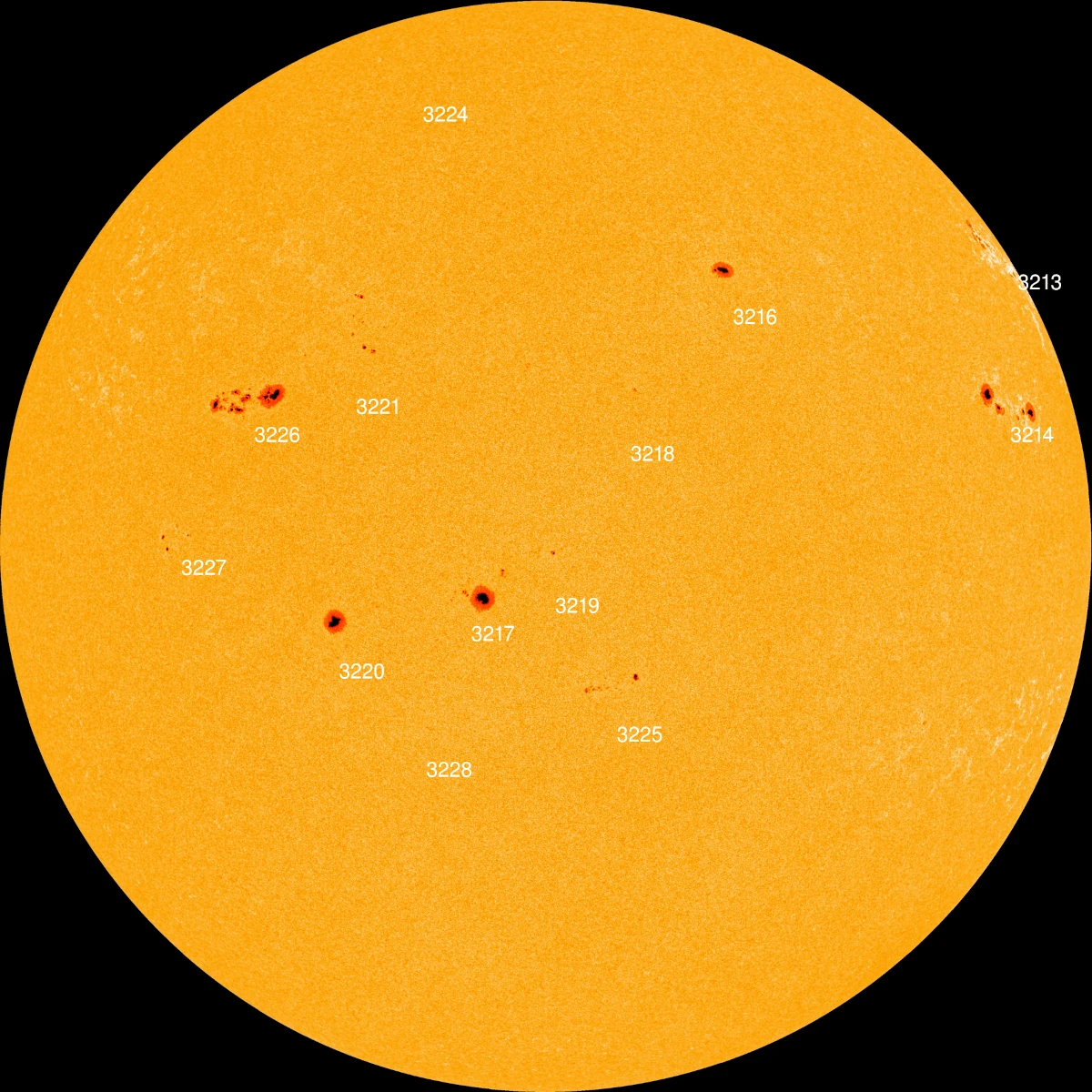
I recently borrowed a Coronado Personal Solar Telescope (PST) from the Royal Astronomical Society of Canada – RASC Toronto Centre and as soon as the sky was clear I started my journey with solar observing and imaging in H-Alpha.
Equipped with a specialized “H-alpha” filter named etalon, and internal blocking filters that reject all unwanted and harmful radiation, with the Coronado PST you can observe the Sun with complete safety and see the dramatic and dynamic features of the Sun, including flares, prominences, filaments, sunspots, and more.
From the Coronado website:
“With the PST you will witness eruptions in the solar atmosphere called flares and the dramatic streamers known as prominences that shoot out from the Sun’s edge. You’ll also see a solar disk mottled with granularity and dark, snaking filaments.
Active regions containing migrating sunspots and bright, irregularly shaped plages add to the incredible detail.
This compact 40mm f/10 refractor houses a special filter called an etalon, which transmits only the primary wavelength of light emitted by hydrogen (656.3nm) in the solar chromosphere, where all the action occurs.”
This small telescope weighs only 3 lbs., and requires only a portable mount or sturdy camera tripod for support.
March 9, 2023, 1:25pm EST: the sky was clear!
I mounted the PST to my portable mount (a Sky-Watcher AZ-GTi modified to equatorial mode), connected to my camera and laptop in just a couple of minutes and I was ready to take my first images of the Sun in H-Alpha.