I Captured a Beautiful Galaxy and a Bright Supernova
I captured a beautiful galaxy and a bright supernova


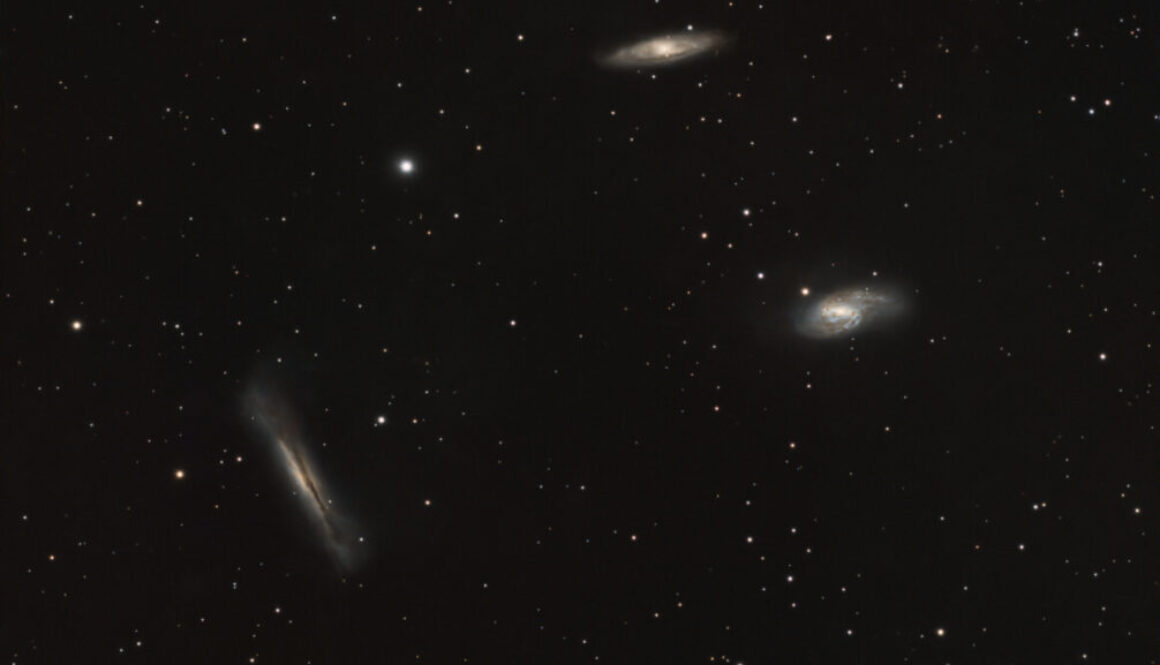
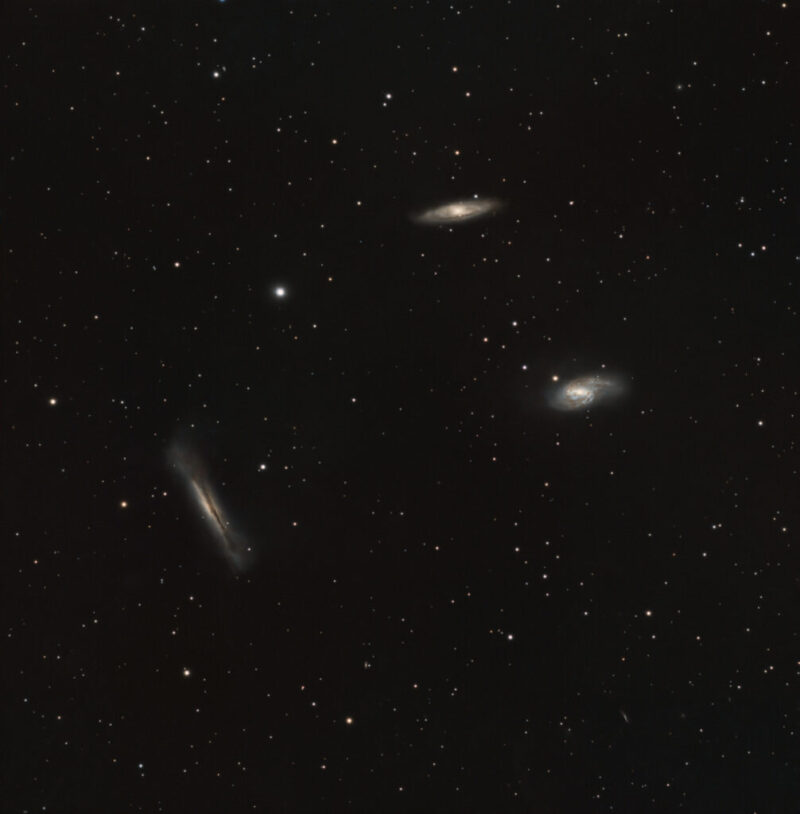
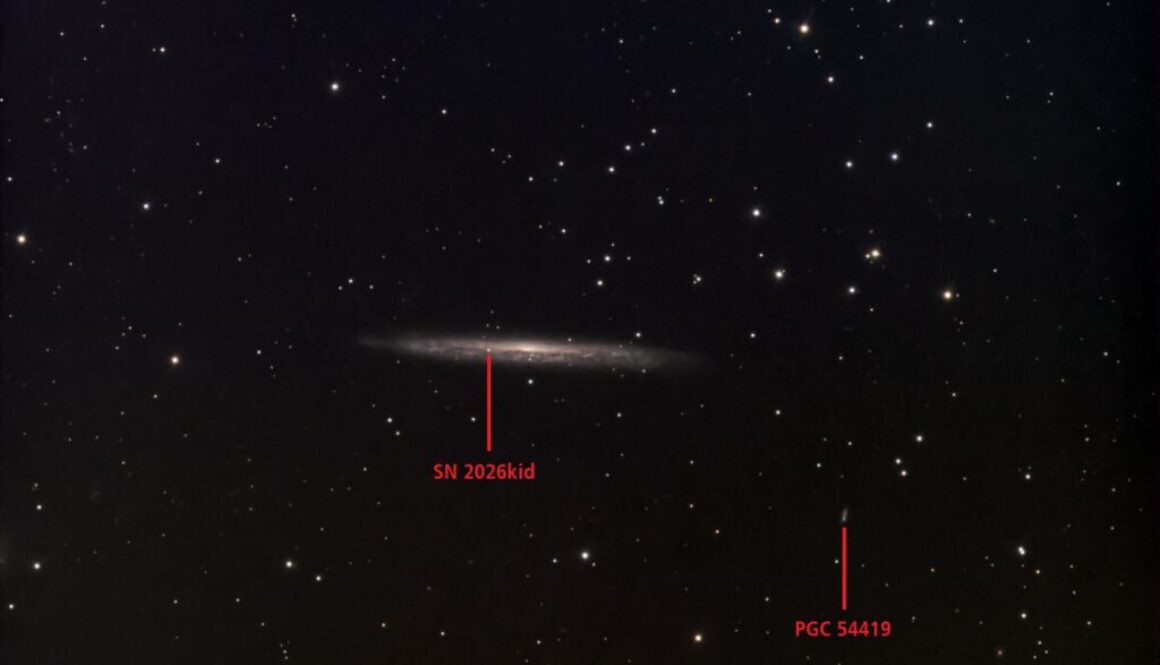
On the evening of April 22, 2026, I captured the Leo Triplet (M65, M66, and NGC 3628) under less than ideal weather conditions. The session was run with my trusted setup, that includes the Explore Scientific ED80 CF APO on an equatorial mount (Juwei 17), the ZWO ASI533MC-PRO with a light pollution filter (the Optolong L-Pro) and N.I.N.A. on a Mele Quieter 4c Mini PC, for full automation of the acquisition. Despite a bright Moon washing out the sky and not-so-good transparency, the data turned out surprisingly nice.
I managed a total integration time of 90 minutes with relatively short subs (45×120 s) to keep the background under control given the bright sky.
The result is not as detailed as I’d hoped, but it’s still quite good for only 90 minutes of integration under a bright Moon. The triplet pops nicely, with the Hamburger Galaxy (NGC 3628) dust lane and the warped arms of M65 and M66 clearly visible.
I especially love the “smiling face” appearance of this trio, with the three galaxies arranged in such a pleasing arc across the frame.
It had been almost five months since my last deep-sky imaging session. Life commitments and work deadlines got in the way, and let’s be honest, the weather in the GTA from November 2025 through March 2026 was brutally uncooperative. Endless clouds, so much snow and rain, and that bone-chilling dampness that made me question why I live here…
My telescope was stored somewhere in my basement, patiently waiting for better times. But yesterday (April 11, 2026) the weather finally cooperated. Clear skies over Richmond Hill, and the temperature not too cold (just +3 degrees). I set up everything out in my backyard well in advance, feeling that familiar mix of excitement and nerves, and carefully planned my imaging targets for the night to get the best from the short imaging time before the clouds were forecasted to roll in.
Windows updates, of course, tried to derail me, popping up just as I powered on the Mini PC. “Not tonight,” I declared, postponing the update while the mount switched back to life.
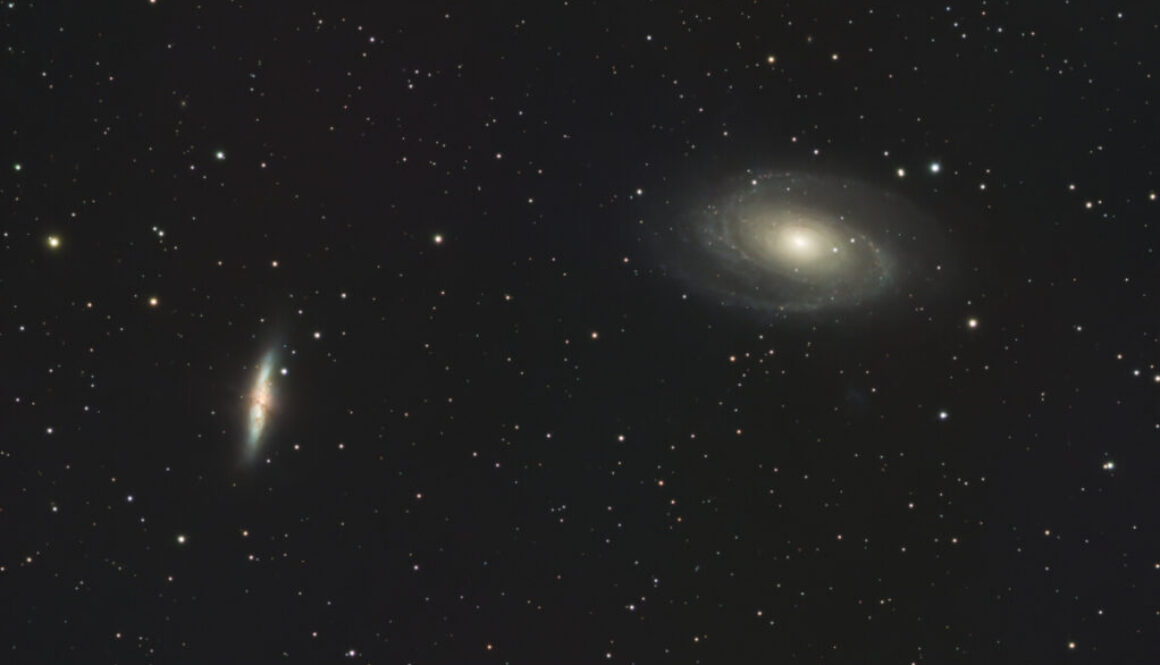
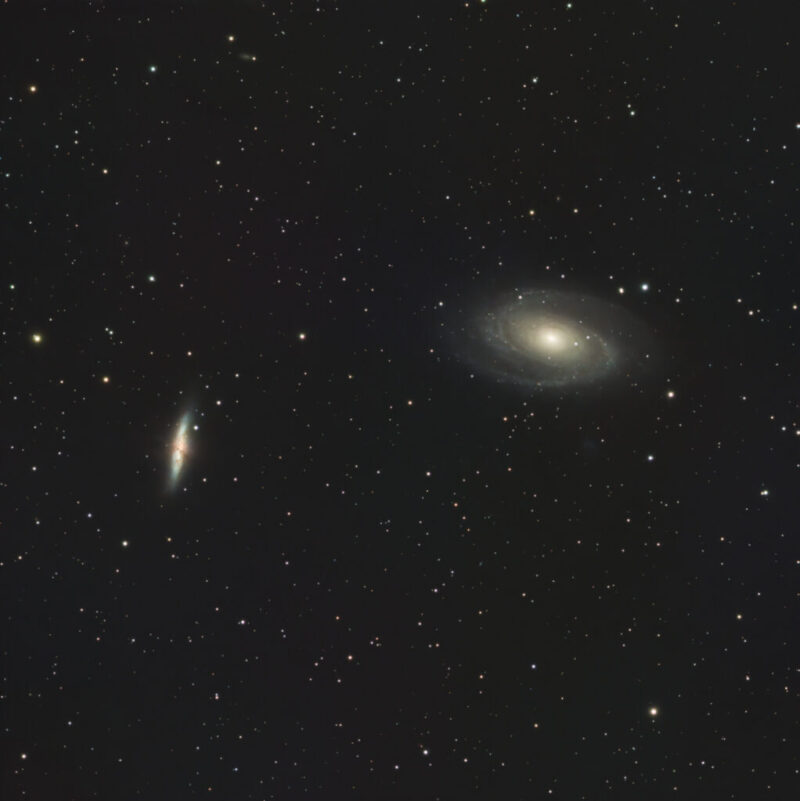
Polar alignment wasn’t the best; it was a bit off, but good enough to start. I didn’t want to waste even 1 minute of my imaging time. I targeted two old favorites that are high in the sky for a number of hours at this time of the year: M81 (Bode’s Galaxy) with its elegant spiral arms, and M82 (the Cigar Galaxy). 50 frames at 120 seconds each, simple stacking and dithering under a sky that felt like a gift after the long drought.
I sat inside monitoring that everything was running smoothly through the night, and I patiently waited for the photons to be collected. I was feeling so good today while post-processing the images through PixInsight. I tried MultiscaleAdaptiveStretch (MAS) to reveal hidden structures inside this galaxy duo: STF for the initial stretch, DBE to remove gradients, SPCC for color calibration, BXT and NXT for sharpening and noise reduction, Curves Transformation, and a final touch with GIMP.
Considering that the total integration time is a little bit less than 2 hours, I’m quite satisfied with the final result. M81’s glow and spirals, M82’s textured chaos.
Astrophotography isn’t always perfect setups or flawless data. Most of the time, it’s troubleshooting a piece of equipment that suddenly behaves in a weird way, waiting for months for the weather to cooperate, fighting Windows updates, overcoming imperfect alignment, and rediscovering the joy in the wait. Looking forward to many more nights like this during galaxy season!
Discover my top 2025 astrophotography hightlights in this 4-minute video. This gallery features globular clusters and open clusters, dozens of galaxies, Saturn with its rings edge-on and a rare Titan’s shadow transit, the Moon, the Sun in H-alpha (with an unexpected visitor – watch until the end to discover), the elusive green flash, colourful nebulae, a bright comet (Lemmon – C/2025 A6), unexpected northern lights, and a few remote telescope images when weather was uncooperative.
May 2026 bring you many nights of clear nights under the stars – looking forward to sharing many more astroimages throughout the year!
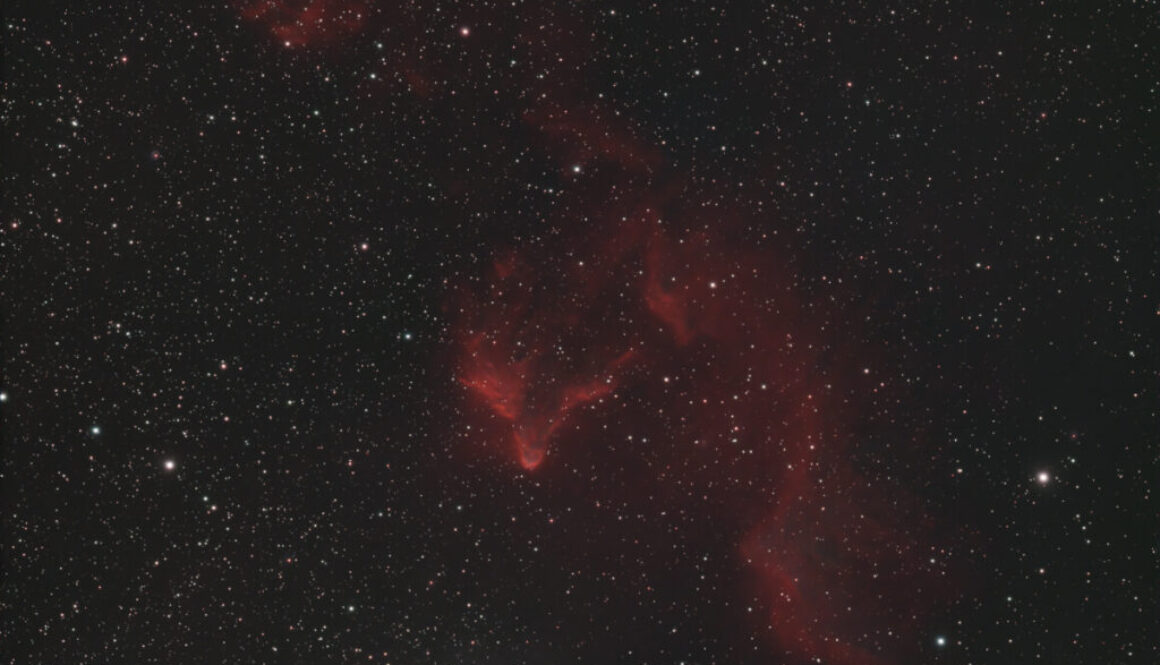
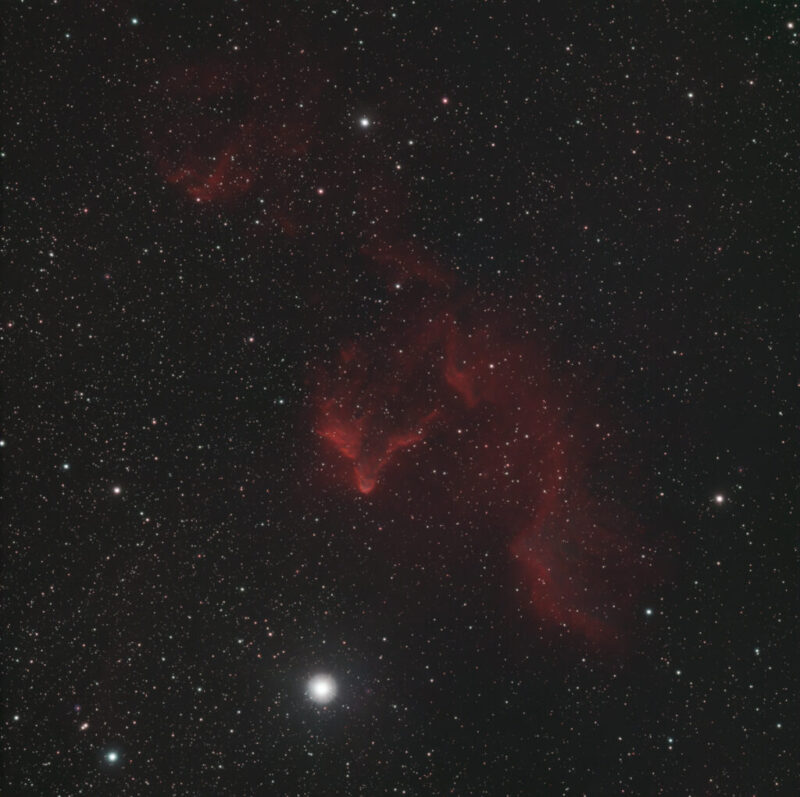
For this year’s spooky season, I set up my gear and let it run through the night to capture a faint nebula haunted by the glow of a nearby bright star: the Ghost of Cassiopeia (IC 63).
I gathered about 4 hours of exposure under city skies (a real challenge for such a faint target). In post-processing, I focused on revealing as much of the nebula as possible without blowing out brilliant Gamma Cassiopeiae. The result is a ghostly apparition that I’m truly happy with!
Acquisition Details:
Scope: Explore Scientific ED80CF
Camera: ZWO ASI533MC Pro (–10 °C)
Filter: Optolong L-eXtreme
Mount: Juwei17
Guiding: PHD2
Control: NINA on Mele Fanless MiniPC
Data: ~4 hours (46 × 300s lights + calibration)
Processing: PixInsight & GIMP
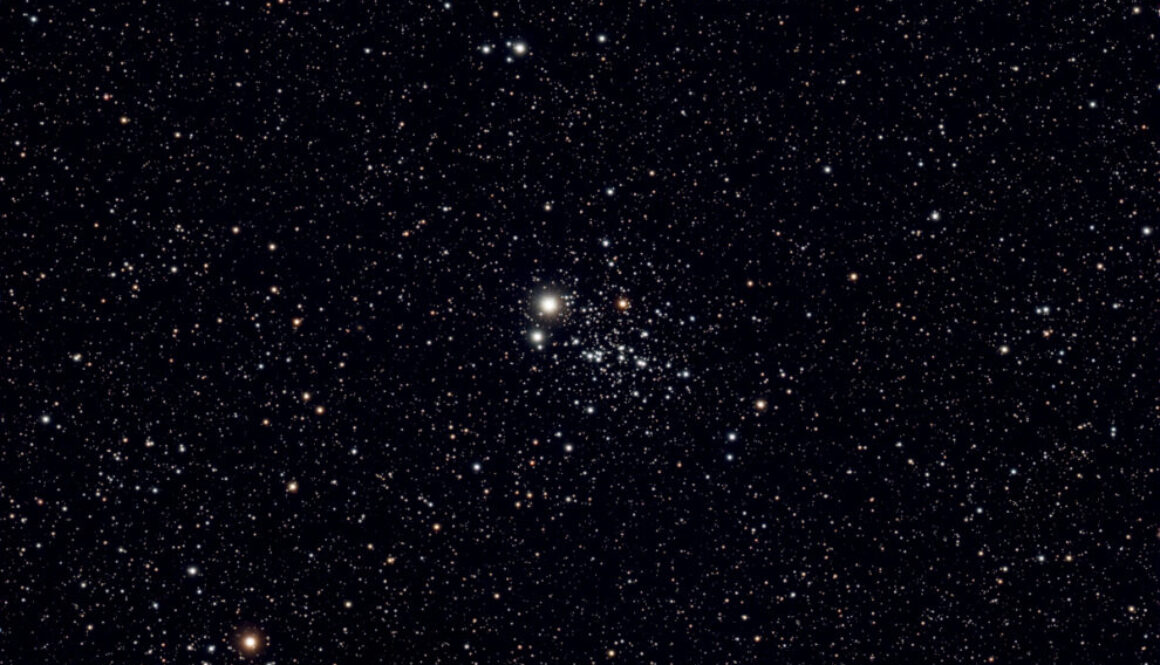
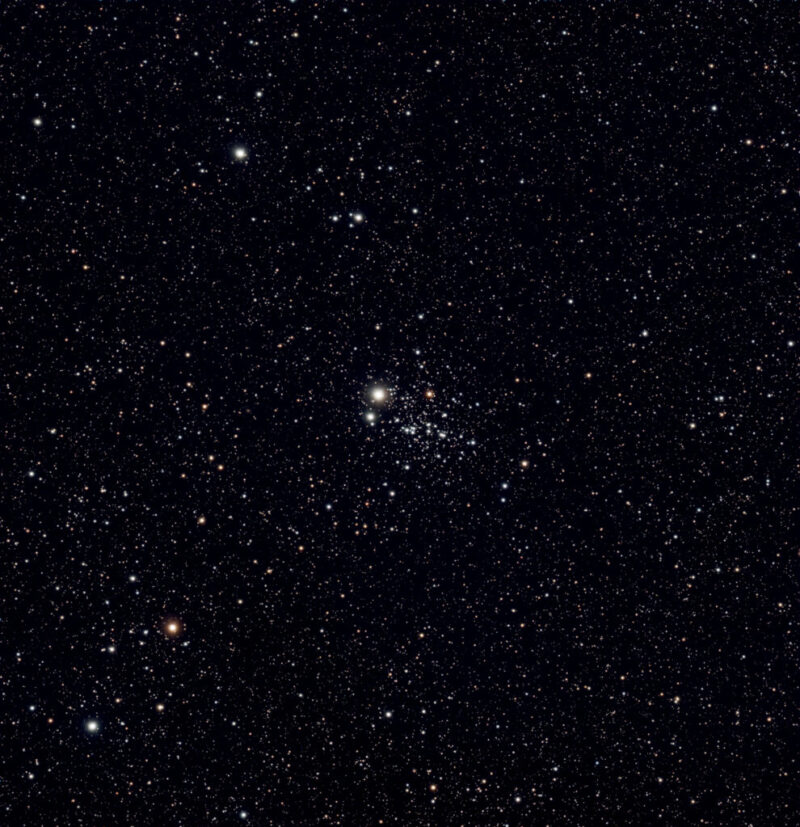
On October 27, 2025 I completed an imaging session of one of my favorite open clusters, NGC 457, also known as the Caldwell 13, Owl Cluster or E.T. Cluster.
Located in the constellation Cassiopeia and 7,900 light-years away, the Owl Cluster has many bright, colorful stars that form a pattern that resembles an owl or a certain friendly alien!
Its two bright “eyes” (φ Cassiopeiae & HD 7902) and wide “wings” give it a unique, photogenic look.
With a visual magnitude of 6.4, it’s an easy target for a binoculars and astro-imagers.
Acquisition details:
Telescope: Explore Scientific ED80CF
Camera: ZWO ASI533MC Pro (–10 °C)
Filter: Optolong L-Pro
Mount: Juwei17
Guiding: PHD2
Control: NINA on Mele fanless MiniPC
Frames: 2 hours 42 minutes total integration (81 x 120 secs. subs)
Processing: PixInsight & GIMP
One feature I consistently use and enjoy is the Touch-N-Stars plugin in NINA. I especially love its 3-point polar alignment. With Touch-N-Stars, I can run and monitor my entire imaging session right from my smartphone, so I don’t need to connect to my MiniPC through remote desktop, as long as I have preloaded an advanced sequence in NINA.
And yes, I’ve just added a custom horizon in NINA, so even more automation is on the way… Stay tuned!
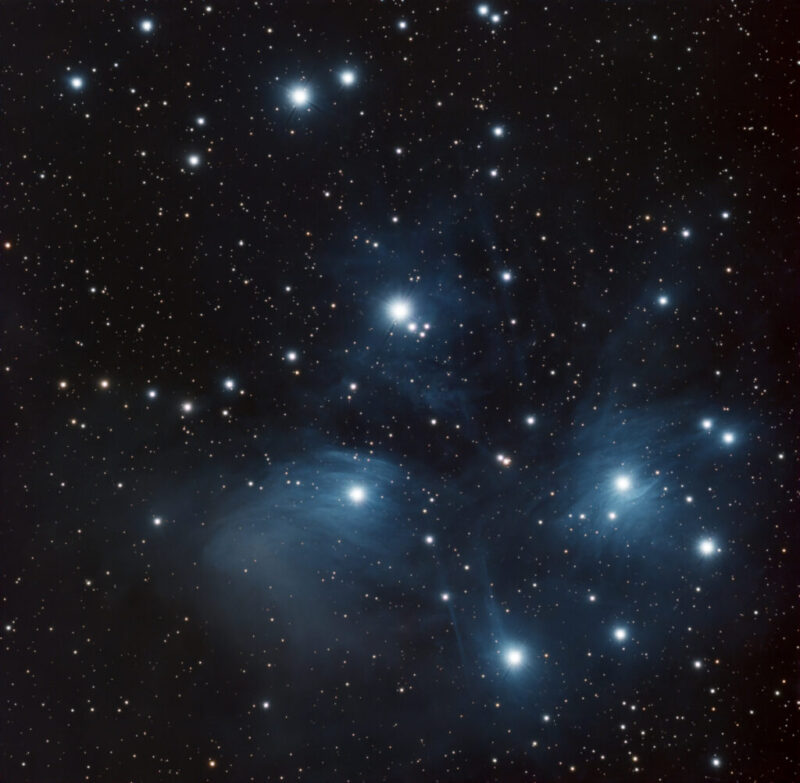
What a night! I spent it imaging the Pleiades (M45) from my backyard in Richmond Hill (Bortle 7-8), as I continue implementing incremental optimizations to my NINA imaging setup. The sky transparency was above average, and at times even excellent, allowing this iconic cluster and its delicate blue reflection nebulae to shine beautifully despite the city glow.
M45 – known in Greek mythology as the Pleiades or the Seven Sisters, and in Japanese as Subaru – is a young open cluster about 440 light-years away in Taurus. It contains hot blue stars that illuminate nearby interstellar dust, creating the famous bluish reflection nebula that surrounds the cluster. The glow is not coming from the stars themselves, but from starlight scattered by fine dust grains drifting through space.
My biggest dilemma for the night was exposure time:
More 120-second subs to avoid oversaturating the brightest stars, or fewer 180-second subs to capture more of the faint blue dust?
I chose 120-second exposures, collecting 3 hours of total integration, and I am overall very happy with how it turned out.
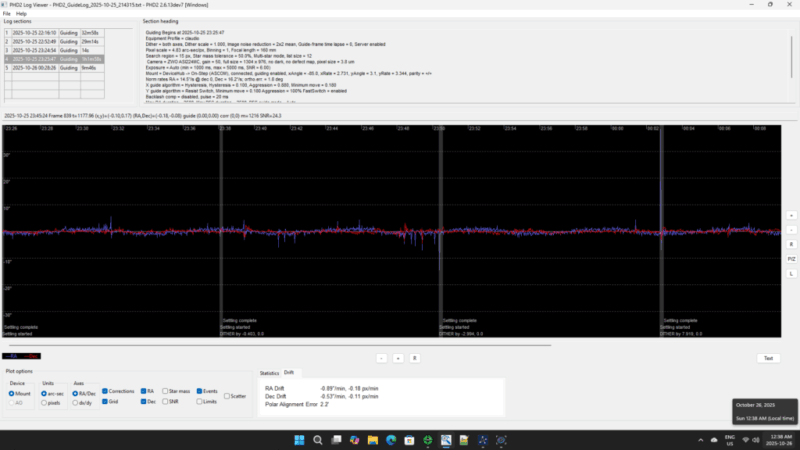
Guiding was a dream – as the PHD2 chart screenshot shows, the guiding lines stayed almost perfectly flat throughout the session.
I also added GroundStation notifications via Pushover to my Advanced Sequence in NINA, so I now get real-time alerts directly on my smartphone for every key step (and for any errors, if they occur): session start and end, mount homing, flat capture, camera warm-up, full equipment disconnect, and even PC shutdown, all handled automatically through the sequence.
I’m really happy with the level of control and reliability I’ve reached. One of my next planned improvements is to create a custom horizon profile in NINA for more precise scheduling and optimized imaging time.
The reflection nebulosity around the Pleiades is clearly visible after just three hours of integration, but I plan to add more hours on the next clear nights to bring out even finer dust details.
Target: The Pleiades (M45)
Location: Backyard, Richmond Hill (Bortle 7–8)
Telescope: Explore Scientific ED80CF
Camera: ZWO ASI533MC Pro (–10 °C)
Filter: Optolong L-Pro
Mount: Juwei17
Guiding: PHD2
Control: NINA + GroundStation plugin (automation & Pushover notifications)
Frames: 3 h total (120 seconds subs)
Processing: PixInsight & GIMP
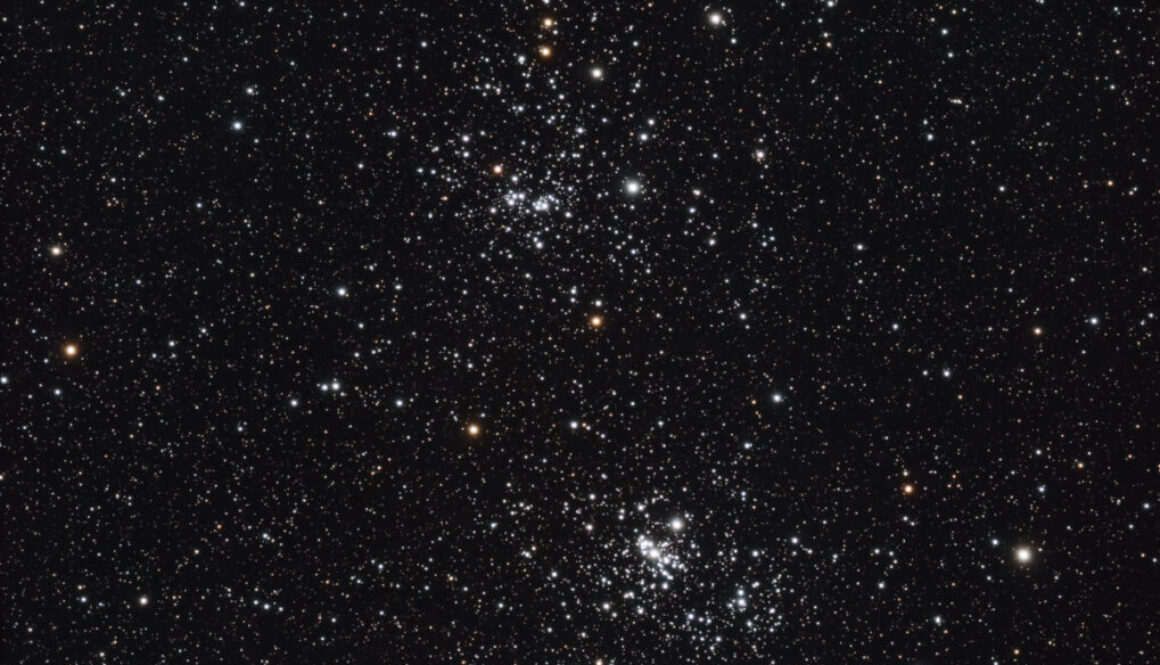
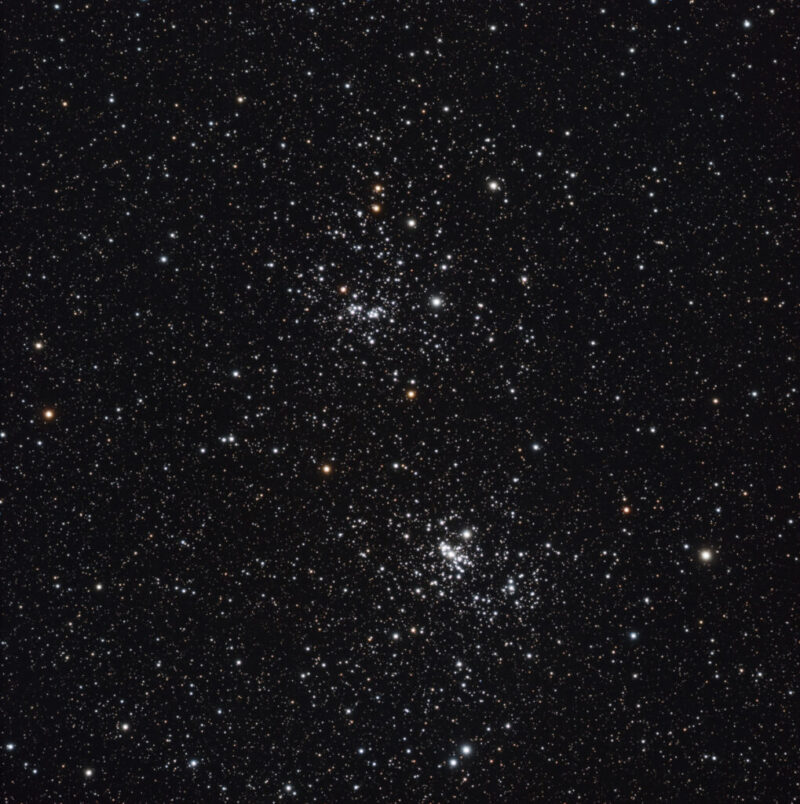
This image of the Double Cluster in Perseus (NGC 869 and NGC 884) was captured under perfectly clear skies, with 4 hours of total integration using the Optolong L-Pro filter.
Acquisition details:
Telescope: Explore Scientific ED80CF
Camera: ZWO ASI533MC Pro (–10 °C)
Filter: Optolong L-Pro
Mount: Juwei17
Guiding: PHD2
Control: NINA on Mele fanless MiniPC
Frames: ~4h total integration
Processing: PixInsight & GIMP
Polar alignment went incredibly smoothly, thanks to the 3D-printed tripod leg markers I made for my setup. With them, alignment now takes less than five minutes, and guiding stayed perfectly stable all night.
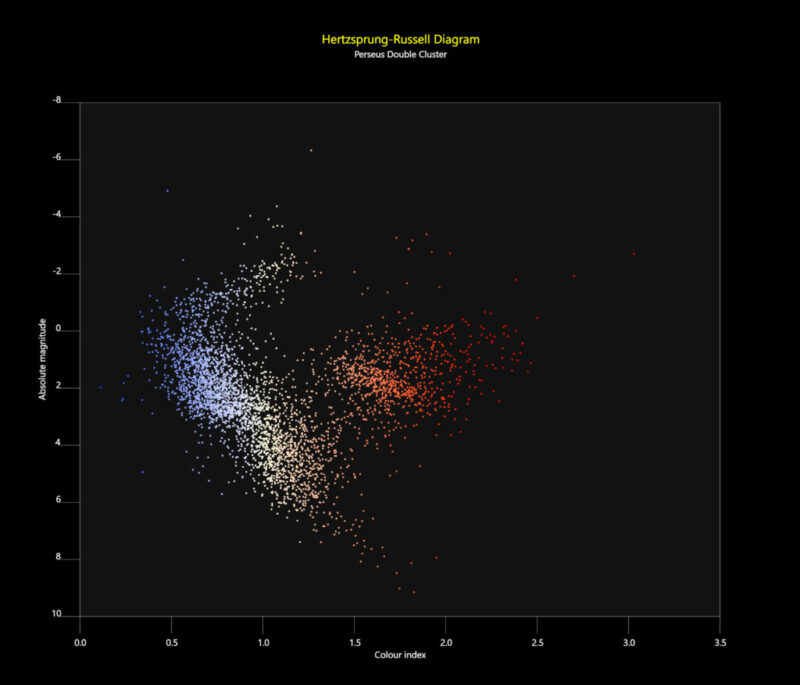
As a bonus, I tried to do some science with the HR Diagram plugin by Cosmic Photons, which generates a true Hertzsprung–Russell diagram from color-calibrated cluster images.
The repository for the PixInsight script can be found here.
Adam Block made a great YouTube video that explains how to use this script.
It’s fascinating to see how well the stars in this field trace the main sequence, just like in a textbook!
The Hertzsprung-Russell diagram of the Double Cluster in Perseus plots absolute magnitude versus color index. Stars occupy a clear main sequence, with the turn-off around 0.5-1.0, indicating the most massive members are leaving the main sequence and becoming blue giants or red supergiants.
The mix of bright blue stars and red supergiants confirms that the clusters are only 10-15 million years old, and the diagram shows how stars of the same age can follow very different paths. (becoming blue giants or red supergiants depending on their mass), making it a natural laboratory for stellar evolution.
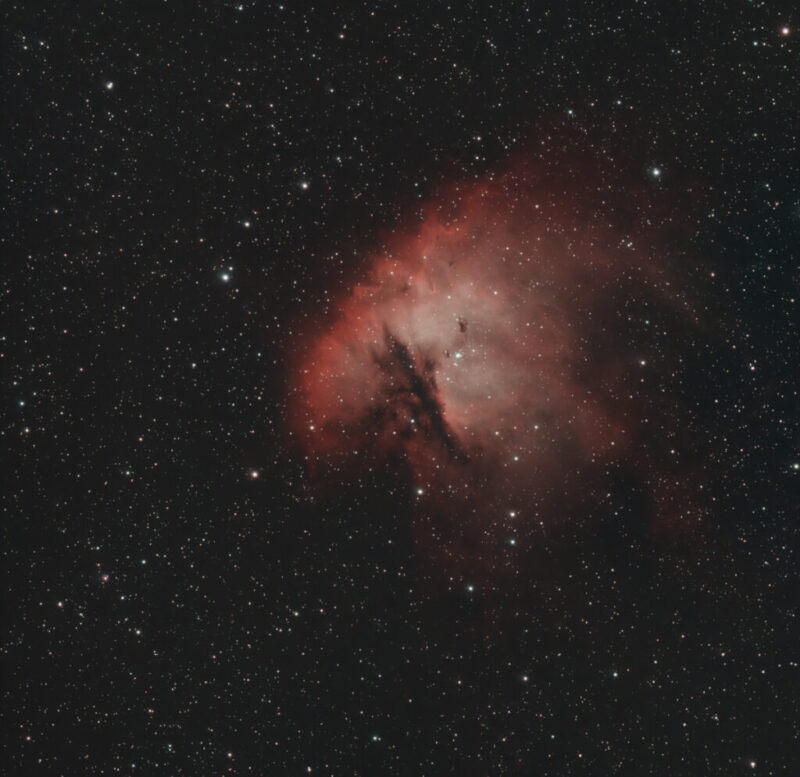
This is my narrowband image of the Pacman Nebula (NGC 281), captured from my backyard with a total integration time of just 2.5 hours.
Acquisition details:
Telescope: Explore Scientific ED80CF
Camera: ZWO ASI533MC Pro (cooled to –10 °C)
Filter: Optolong L-eXtreme
Mount: Juwei17
Guiding: PHD2
Control: NINA running on a Mele fanless mini PC
Frames: 30 × 300 s light frames + calibration frames (total ~2.5 h)
Processing: PixInsight & GIMP
Despite the relatively short total exposure time, I’m really happy with how this image turned out. The Hα emission regions and dark dust lanes of the nebula stand out beautifully, revealing much of the structure of the Pacman Nebula.
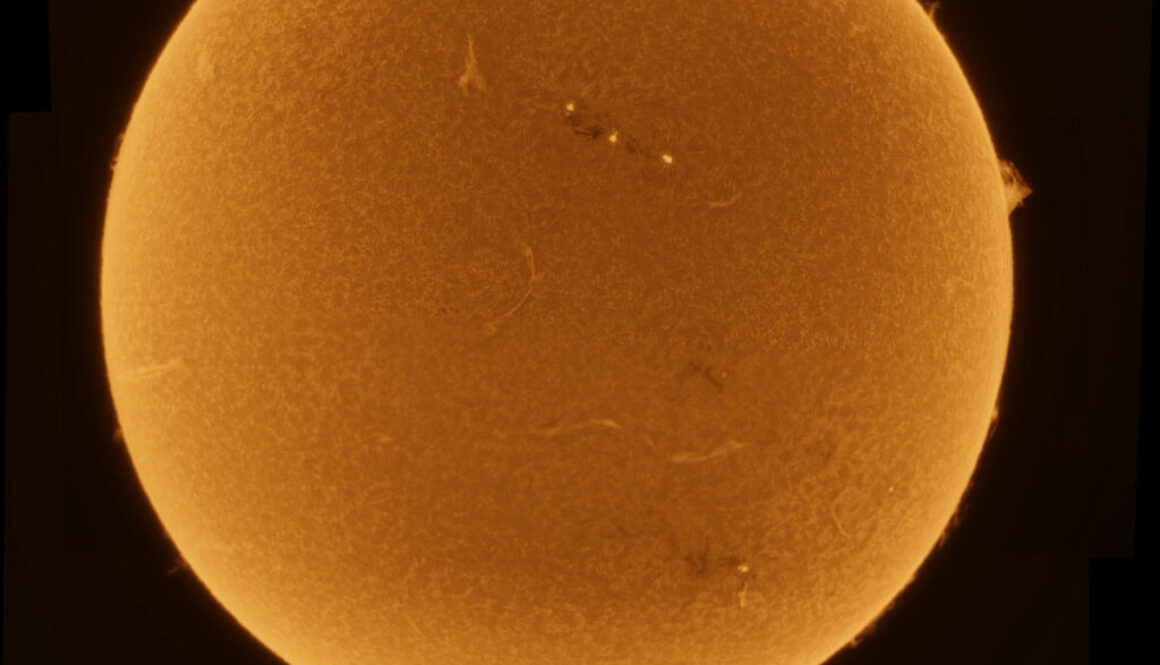
Want to learn how to capture stunning images of the Sun in just 2 minutes?
Then don’t miss my latest step-by-step video tutorial now available on YouTube!
Workflow steps covered in this video tutorial:
Data Acquisition – Record solar videos using FireCapture or SharpCap, ensuring the histogram remains around 70% for optimal exposure.
Frame Selection and Stacking – Process the recordings in AutoStakkert to identify and stack the sharpest frames, applying the technique known as lucky imaging.
Mosaic Creation – When the full solar disc does not fit within the field of view, generate a mosaic using Autostitch or comparable software.
Image Processing – Refine the stacked result with imPPG, applying deconvolution and contrast adjustments to enhance fine solar detail.
Colorization – Convert the monochrome data into a false-color image with GIMP or Photoshop, improving contrast and making solar structures clearer.
Annotation and Scaling – Employ Lusol3D to add dimensional markers and an Earth reference, illustrating the Sun’s scale and context.
Warning: Only use certified solar telescopes or filters – never look directly at the Sun without proper protection.